

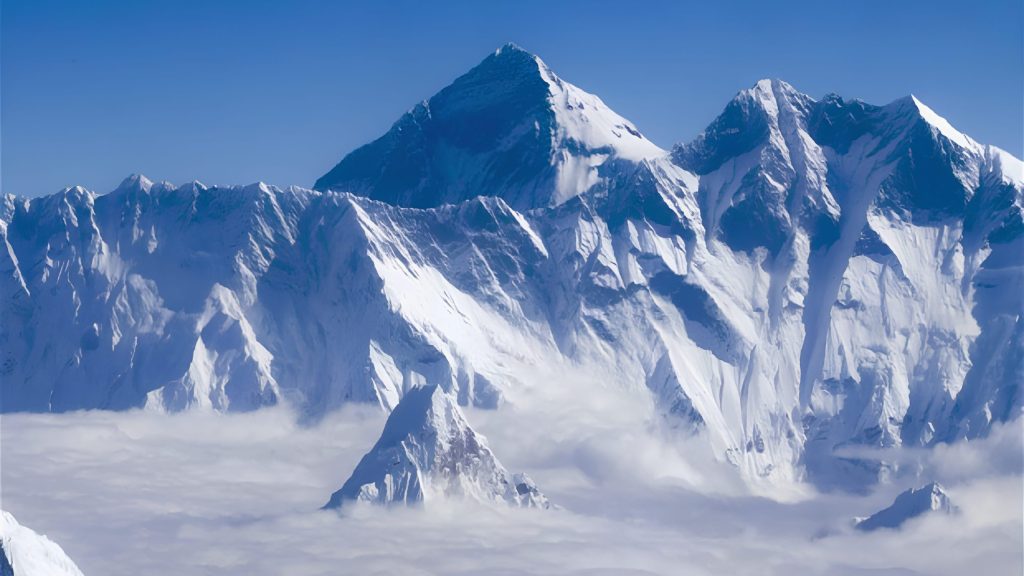
Everest North Face Expedition(From Tibet Side)
The route to Everest’s summit from the Tibetan side has increasingly become a favored path for mountaineers striving to reach the top of the world. A key draw is its affordability — both in terms of climbing permits and logistical support — combined with a reputation for being a safer alternative to the Nepalese (southern) approach. As a result, more climbers are choosing the North Col route over the South Col.
Though the northern path poses greater technical difficulty, it has one major advantage: it avoids the hazardous Khumbu Icefall found on the southern side. A unique benefit of this northern route is the ability to see most of the climb directly from base camp — a rare and motivating perspective.
The expedition kicks off with a drive to Base Camp, situated at an altitude of 5,200 meters. From there, the team treks 22 kilometers to reach Advance Base Camp at 6,400 meters, assisted by yaks for transporting gear. The journey continues along the East Rongbuk Glacier, leading to steep snow-covered slopes and eventually the North Col at 7,000 meters, where Camp 1 is set up. This campsite, while not spacious, offers dramatic views of the North Face and the glacier below.
From Camp 1, climbers ascend snowy terrain to Camp 2, located at 7,400 meters, at the top of a prominent snow ramp. This area is exposed and prone to strong winds. The next leg to Camp 3 at 7,900 meters involves scrambling over rocks and gravel on gentler slopes. Camp 3 sits on rocky ledges and serves as a crucial resting point before the summit push.
The route to Camp 4 at 8,400 meters combines snowfields and rock bands. Depending on recent snowfall, the camp may rest on bare rock or carved-out snow shelves. The summit attempt begins from here, tackling a mix of steep rock and snow sections. Climbers must navigate the infamous “Three Steps” before reaching the summit via the Northeast Ridge.